
Illuminating Relief: How Guided Imagery and Hypnosis Can Soothe Chronic Pain
Discover how guided imagery, particularly the 'healing light' technique, can be a powerful tool for managing chronic pain and promoting deep relaxation. Learn the science behind this mind-body connection and how hypnosis enhances its effectiveness.
Illuminating Relief: How Guided Imagery and Hypnosis Can Soothe Chronic Pain
Chronic pain is a pervasive and often debilitating condition affecting millions worldwide. It's more than just a physical sensation; it impacts our mood, sleep, and overall quality of life. While medical interventions are crucial, a growing body of evidence suggests that mind-body techniques, such as guided imagery and hypnosis, offer powerful complementary strategies for pain management. One particularly evocative technique is the 'healing light' meditation, which harnesses the power of visualization to bring comfort and promote well-being.
The Mind-Body Connection: Your Internal Pharmacy
Our bodies and minds are intricately linked, a concept that forms the foundation of mind-body medicine. When we experience pain, it's not just a signal from damaged tissue; it's a complex experience influenced by our thoughts, emotions, and beliefs. The brain plays a central role in processing and modulating pain signals. This means that by consciously directing our mental focus, we can influence our perception of pain (Turk & Okifuji, 2002).
Guided imagery is a powerful tool within this mind-body framework. It involves creating vivid mental pictures, sensations, and feelings to achieve a desired outcome, whether it's relaxation, stress reduction, or pain relief. When you imagine a 'healing light,' you're not just daydreaming; you're engaging neural pathways that can influence physiological responses. Research indicates that guided imagery can reduce anxiety, improve mood, and even decrease the intensity of pain by activating the parasympathetic nervous system, which promotes a state of 'rest and digest' (Tusek et al., 1999).
The Power of the Healing Light: A Guided Imagery Technique
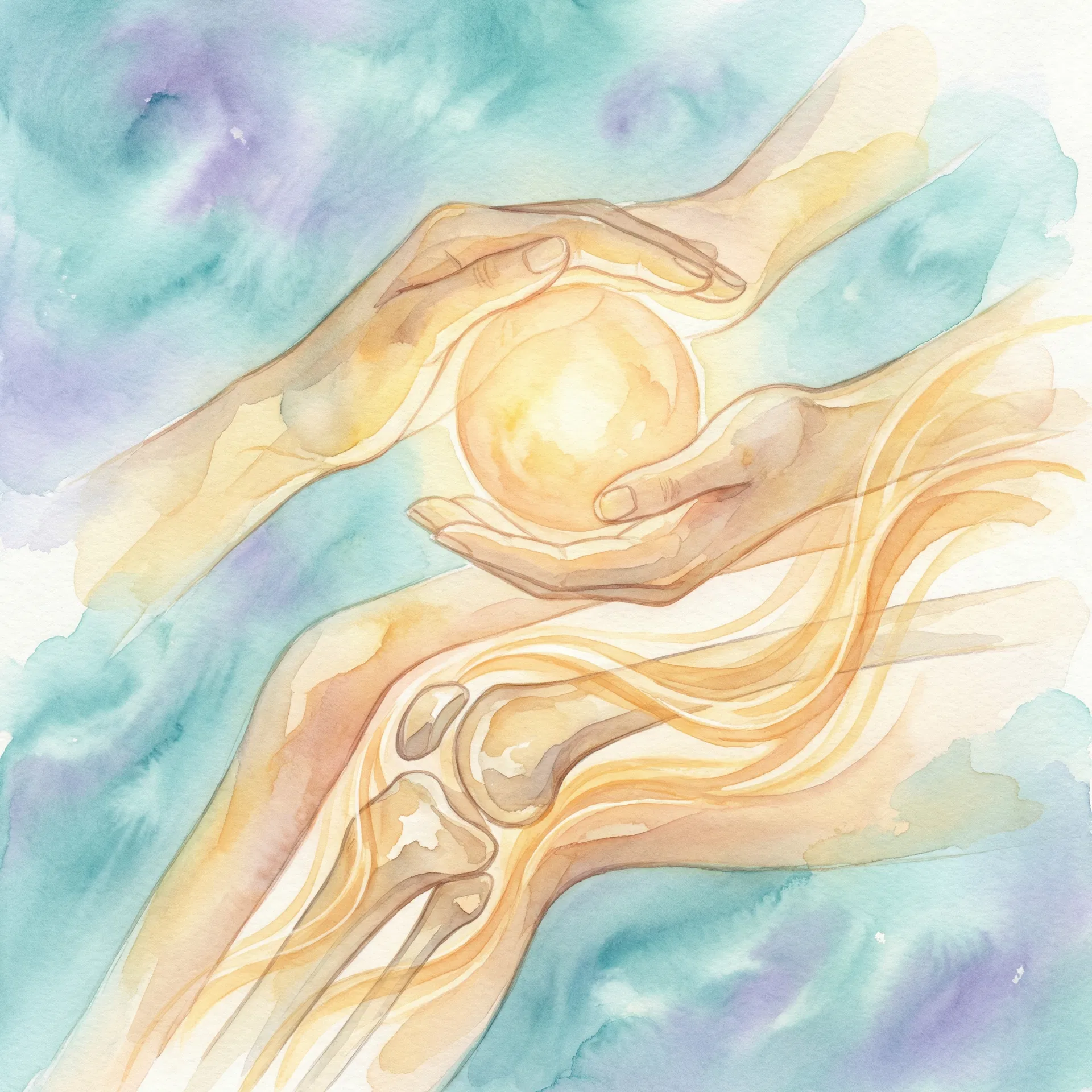
Imagine a gentle, warm light, perhaps golden or a soothing blue, emanating from within you or entering your body. As this light spreads, it brings with it a sense of warmth, comfort, and ease. You might visualize it dissolving tension, soothing inflammation, or simply bringing a profound sense of calm to areas of discomfort. This is the essence of the healing light meditation.
This technique works on several levels:
- Distraction: By focusing intensely on the imagery, you divert attention away from pain signals, effectively reducing their perceived intensity.
- Relaxation Response: The calming imagery triggers the body's relaxation response, lowering heart rate, blood pressure, and muscle tension, all of which can exacerbate pain.
- Positive Expectancy: Believing in the healing power of the light can activate the placebo effect, a well-documented phenomenon where positive expectations lead to real physiological changes (Benedetti, 2014).
- Symbolic Healing: For many, the 'light' symbolizes hope, purity, and restoration, fostering a sense of inner healing and resilience.
Regular practice of such imagery can train your brain to respond differently to pain, creating new neural pathways that favor comfort over discomfort.
How Hypnosis Enhances Guided Imagery for Pain Relief
Hypnosis is a state of focused attention and heightened suggestibility, often described as a deeply relaxed, trance-like state. It's not mind control, but rather a natural state that we all enter spontaneously, such as when engrossed in a book or a movie. When guided imagery is combined with hypnosis, its effectiveness for pain management can be significantly amplified.
During a hypnotic state, your critical faculty is temporarily bypassed, making you more receptive to positive suggestions and imagery. This means that the healing light imagery can penetrate deeper into your subconscious mind, where it can exert a more profound influence on your perception of pain and your body's healing processes (Elkins et al., 2007). Hypnosis can help you:
- Deepen Relaxation: Induce a state of profound physical and mental relaxation, which is crucial for pain relief.
- Intensify Imagery: Make the healing light visualization more vivid, real, and impactful.
- Reframe Pain: Change your relationship with pain, allowing you to perceive it differently—perhaps as a sensation that can be managed or even diminished, rather than an overwhelming force.
- Boost Self-Efficacy: Empower you with a sense of control over your pain experience, fostering confidence in your body's ability to heal and adapt.
Many studies support the use of hypnosis for chronic pain conditions, including fibromyalgia, irritable bowel syndrome, and cancer-related pain, often demonstrating significant reductions in pain intensity and improved quality of life (Jensen & Patterson, 2014).
Conclusion: Embrace Your Inner Healing Light
The journey of chronic pain management is often complex, but incorporating mind-body techniques like guided imagery and hypnosis offers a powerful avenue for relief and empowerment. The 'healing light' meditation provides a gentle yet effective way to tap into your body's innate capacity for comfort and healing. By regularly practicing this visualization, especially within a hypnotic state, you can cultivate a deeper sense of calm, reduce discomfort, and actively participate in your own well-being. Embrace the illuminating power within you and discover a new path to relief and relaxation.
References
Benedetti, F. (2014). Placebo and the new physiology of the mind-body connection. Physiological Reviews, 94(4), 1227-1246.
Elkins, G., Johnson, A., & Johnson, V. (2007). Clinical hypnosis for pain management: An overview of research and recent advances. Current Pain and Headache Reports, 11(2), 140-146.
Jensen, M. P., & Patterson, D. R. (2014). Hypnotic approaches for chronic pain management: Clinical implications of recent research findings. American Psychologist, 69(2), 167-177.
Turk, D. C., & Okifuji, A. (2002). Psychological factors in chronic pain: Evolution and revolution. Journal of Consulting and Clinical Psychology, 70(3), 678-690.
More Sessions You Might Enjoy


Get Weekly Wellness Tips
New hypnosis sessions, mindfulness techniques, and evidence-based wellness insights delivered to your inbox.
No spam. Unsubscribe anytime.