
Unlocking Your Inner Athlete: The Power of Visualization for Runners
Discover how mental imagery can enhance your running performance, boost motivation, and help you experience the 'runner's high' even before you hit the pavement.
Running is more than just a physical activity; it's a mental game. Whether you're chasing a personal best, building endurance, or simply enjoying the outdoors, your mindset plays a crucial role in your performance and consistency. What if you could tap into the euphoric feeling of a 'runner's high' and boost your motivation before you even lace up your shoes? This is where the powerful technique of visualization comes into play.
The Science Behind Mental Rehearsal
Visualization, also known as mental rehearsal or imagery training, is a cognitive technique where an individual creates vivid mental images of performing an action or achieving a goal. This isn't just wishful thinking; it's a scientifically supported method used by elite athletes across various disciplines to enhance performance (Weinberg, 2008). When you visualize yourself running, your brain doesn't fully differentiate between the imagined experience and the real one. Neurological studies show that imagining an action activates many of the same brain regions that are involved in actually performing that action (Jeannerod, 1994).
This neural activation helps to strengthen neural pathways, making the actual physical execution smoother and more efficient. For runners, this means that by regularly visualizing a successful run – feeling the rhythm of your stride, experiencing the ease of your breath, and even anticipating the 'runner's high' – you are essentially practicing the run in your mind. This mental practice can improve motor skills, increase confidence, and reduce performance anxiety (Feltz & Landers, 1983).
Cultivating the Runner's High Through Imagery
The 'runner's high' is a well-documented phenomenon characterized by feelings of euphoria, reduced anxiety, and a diminished perception of pain during or after prolonged exercise. Traditionally, this has been attributed to the release of endorphins, but more recent research points to endocannabinoids, which are brain chemicals similar to those found in cannabis, as key contributors to these blissful feelings (Boecker et al., 2008). These natural chemicals interact with receptors in the brain to produce mood-elevating and pain-relieving effects.
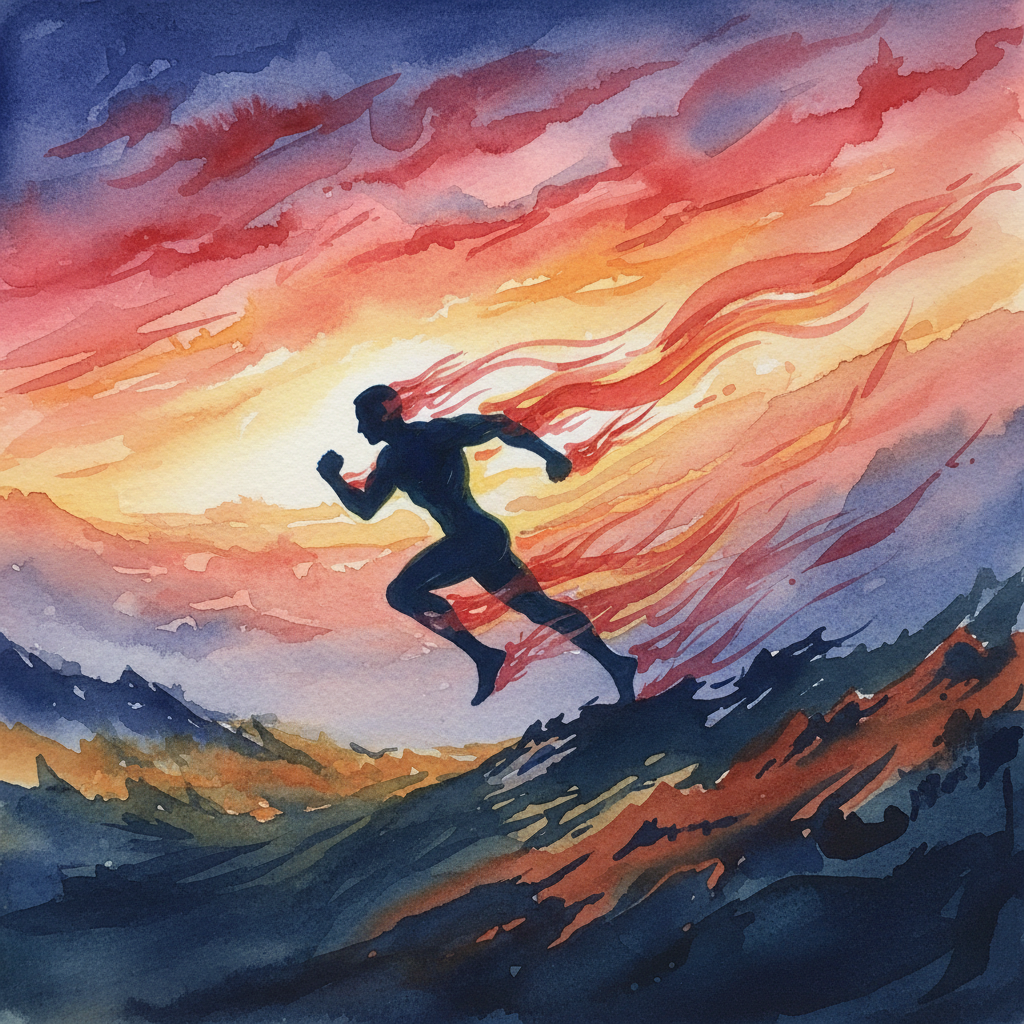
By engaging in vivid visualization, you can begin to prime your brain and body for these positive physiological responses. Imagine the sensation of your feet hitting the ground, the rhythmic breathing, the wind on your face, and the growing sense of exhilaration as you move. Focus on the feeling of effortlessness and the surge of positive energy. This mental simulation can help to create a positive feedback loop, making your actual runs more enjoyable and increasing the likelihood of experiencing that coveted 'runner's high'. It's about training your mind to anticipate and even generate these positive states.
Practical Tips for Effective Visualization
To make your visualization practice as effective as possible, consider these tips:
- Find a Quiet Space: Minimize distractions to fully immerse yourself in the experience.
- Engage All Senses: Don't just see the run; feel the ground beneath your feet, hear your breath, smell the air, and taste the hydration. The more sensory details you include, the more real the experience will feel to your brain.
- Focus on the Process and Outcome: Visualize yourself performing each step of your run with ease and efficiency. Also, imagine crossing the finish line, feeling strong and accomplished, or simply enjoying the post-run glow.
- Practice Regularly: Consistency is key. Dedicate a few minutes each day, perhaps before your run or as part of your morning routine, to this mental training.
- Incorporate Emotions: Feel the joy, the determination, the peace, and the euphoria. Emotional engagement significantly enhances the power of visualization (Guillot & Collet, 2008).
How Hypnosis Enhances Visualization for Runners
Hypnosis provides a powerful framework for deepening and amplifying the benefits of visualization. In a hypnotic state, your mind becomes more receptive to suggestions and imagery, allowing for a more profound and immersive mental rehearsal experience. Hypnosis can help you:
- Achieve Deeper Focus: By guiding you into a relaxed, focused state, hypnosis minimizes distractions and allows for more vivid and sustained visualization.
- Strengthen Positive Associations: Hypnotic suggestions can reinforce positive beliefs about your running ability, your endurance, and your capacity to experience joy and ease during your runs. This can help to overcome mental blocks or self-doubt.
- Prime for the Runner's High: Through guided imagery and suggestion, hypnosis can help your mind and body anticipate and more readily produce the neurochemical responses associated with the 'runner's high', making the real experience more accessible.
- Improve Consistency: By making the idea of running more appealing and less daunting, hypnosis can enhance your intrinsic motivation, leading to more consistent training and a greater commitment to your running goals.
By combining the scientific power of visualization with the focused receptivity of hypnosis, you can unlock new levels of performance, enjoyment, and consistency in your running journey. It's about training not just your body, but also your mind, to become the best runner you can be.
References
Boecker, H., Sprenger, T., Spilker, M. E., Bartenstein, G. P., Schwaiger, M., Hiller, M., ... & Endres, S. (2008). The runner's high: opioidergic mechanisms in the human brain. Cerebral Cortex, 18(11), 2523-2531.
Feltz, D. L., & Landers, D. M. (1983). The effects of mental practice on motor skill learning and performance: A meta-analysis. Journal of Sport Psychology, 5(1), 25-57.
Guillot, A., & Collet, C. (2008). Construction of the motor imagery integrative model in sport: A review and a prospective agenda. Psychology of Sport and Exercise, 9(3), 391-411.
Jeannerod, M. (1994). The representing brain: Neural correlates of motor intention and imagery. Behavioral and Brain Sciences, 17(2), 187-202.
Weinberg, R. S. (2008). Does imagery work? Effects on sport performance and behavior. International Journal of Sport and Exercise Psychology, 6(1), 7-17.
More Sessions You Might Enjoy


Get Weekly Wellness Tips
New hypnosis sessions, mindfulness techniques, and evidence-based wellness insights delivered to your inbox.
No spam. Unsubscribe anytime.