
Unlocking Restful Nights: The Science of Counting Down to Deep Sleep
Discover how the simple act of counting down, combined with guided hypnosis, can profoundly transform your sleep quality. Learn the science behind this powerful technique and practical tips for achieving truly restorative rest.
A good night's sleep is not just a luxury; it's a fundamental pillar of our physical and mental well-being. Yet, for many, the journey to deep, restorative slumber can feel like an uphill battle. Racing thoughts, lingering tension, and the day's stresses often conspire to keep us awake. What if there was a gentle, yet powerful, method to guide your mind and body into a state of profound relaxation, preparing you for the sleep you deserve? This is where the art and science of counting down to deep sleep, often amplified by guided hypnosis, comes into play.
The Brain's Lullaby: How Counting Calms the Mind
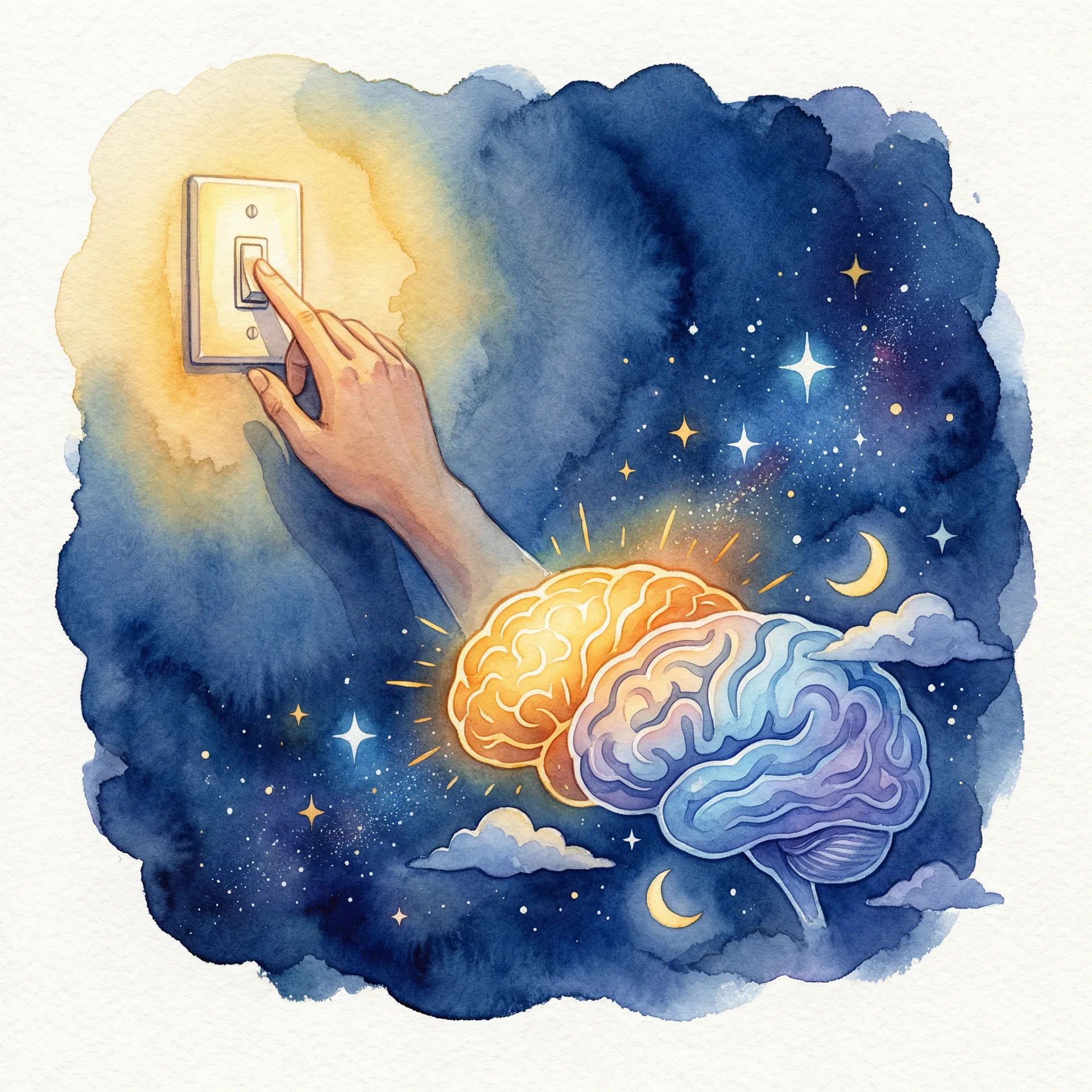
The concept of counting to induce sleep is surprisingly effective and rooted in basic psychological principles. When we focus on a repetitive, simple task like counting, it engages our conscious mind just enough to distract it from intrusive thoughts and worries. This mental engagement prevents the mind from wandering into anxiety-provoking scenarios or replaying the day's events, which are common culprits for sleeplessness (Harvey, 2008). By giving your brain a 'job' – counting down from a higher number – you create a gentle, rhythmic mental activity that occupies the prefrontal cortex, the part of the brain responsible for planning and problem-solving. This redirection helps to quiet the internal chatter, allowing your brain to shift from an alert, active state to a more relaxed, pre-sleep state.
Furthermore, the act of counting down often comes with an inherent sense of progression and completion. As you move from a higher number to a lower one, there's a subtle psychological signal that you are approaching a desired endpoint – in this case, sleep. This can foster a sense of anticipation and calm, rather than the frustration often associated with trying too hard to sleep.
The Physiology of Relaxation: Why Your Body Needs to Let Go
Beyond the mental aspect, preparing for sleep also requires a significant physiological shift. Our bodies need to transition from a state of sympathetic nervous system dominance (our 'fight or flight' response) to parasympathetic nervous system dominance (our 'rest and digest' response). This involves a decrease in heart rate, muscle tension, and respiratory rate.
Techniques that encourage deep, diaphragmatic breathing and progressive muscle relaxation are crucial here. When you consciously relax different muscle groups throughout your body, you send signals to your brain that it's safe to unwind. This physical release directly impacts your mental state, creating a positive feedback loop where physical relaxation begets mental calm, and vice versa (Goyal et al., 2014). The combination of mental focus (counting) and physical relaxation creates an optimal environment for sleep onset.
Hypnosis: Guiding Your Way to Deeper Sleep
Guided hypnosis for sleep takes these natural processes and enhances them. During a hypnosis session focused on sleep, a trained practitioner or recording uses specific language and imagery to induce a state of heightened suggestibility and focused attention. This isn't about being 'asleep' or 'unconscious,' but rather a deeply relaxed, trance-like state where your mind is more receptive to positive suggestions.
In the context of a 'counting down to deep sleep' session, hypnosis can deepen the effectiveness of the counting technique. The hypnotist might guide you to visualize each number as it's counted, perhaps associating it with a feeling of increasing heaviness or relaxation. Suggestions for releasing tension, calming the mind, and embracing peaceful sleep are woven throughout the counting process. Research has shown that hypnosis can significantly improve sleep quality, reduce the time it takes to fall asleep, and even increase the amount of time spent in deep, restorative sleep stages (Chamine & Pomarol-Clotet, 2010; Graci & Rusch, 2016). By bypassing the conscious mind's resistance and directly communicating with the subconscious, hypnosis helps to reprogram negative sleep patterns and reinforce positive ones.
Practical Tips for a Restful Night
To complement your 'counting down to deep sleep' practice, consider these evidence-based tips:
- Establish a Consistent Sleep Schedule: Go to bed and wake up at roughly the same time each day, even on weekends (Irish et al., 2015).
- Create a Relaxing Bedtime Routine: This could include a warm bath, reading a book, or listening to calming music. Avoid screens an hour before bed.
- Optimize Your Sleep Environment: Ensure your bedroom is dark, quiet, and cool. Consider blackout curtains, earplugs, or a white noise machine.
- Watch Your Diet: Limit caffeine and alcohol, especially in the hours leading up to bedtime. Avoid heavy meals close to sleep.
- Incorporate Mindfulness: Practice mindfulness or meditation during the day to help manage stress, which can indirectly improve sleep.
Embrace the Journey to Serenity
Falling asleep doesn't have to be a struggle. By understanding the interplay between your mind and body, and by embracing techniques like counting down, especially when guided by hypnosis, you can unlock the door to truly restorative sleep. Allow yourself the gift of deep relaxation, and awaken refreshed, revitalized, and ready to embrace your day.
More Sessions You Might Enjoy


Get Weekly Wellness Tips
New hypnosis sessions, mindfulness techniques, and evidence-based wellness insights delivered to your inbox.
No spam. Unsubscribe anytime.